
ESP
Resource ESP: Spice, Water, and Crafting Mats
Player ESP wins fights. Resource ESP wins economies. Dune: Awakening needs spice, water, and crafting materials spread across huge maps. Without filters you either miss rich nodes or drown in pins — here is how to keep resource ESP useful.
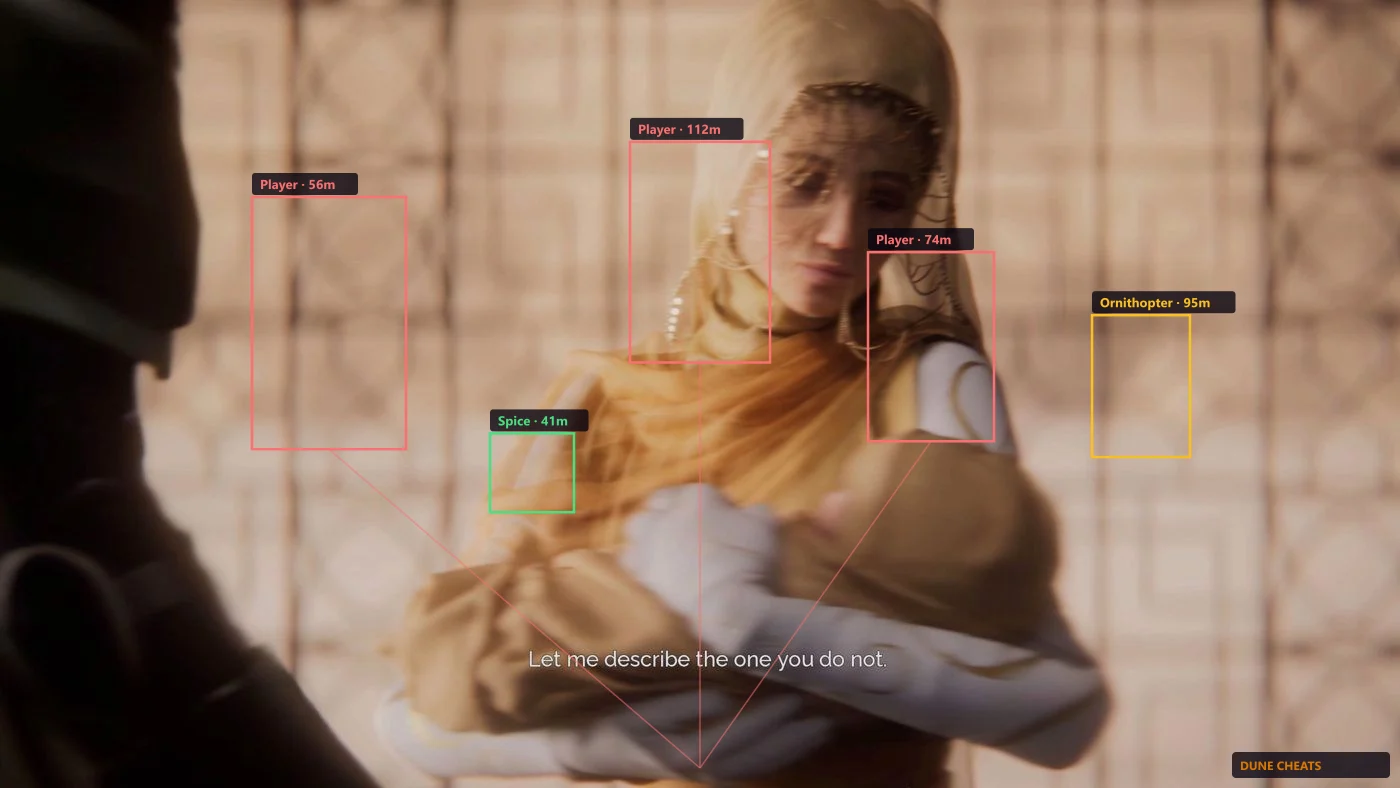
Categories worth toggling on
Spice fields and harvestable nodes are the default priority. Water sources matter in long Deep Desert loops. Crafting mats depend on your current build — toggle ore and parts when upgrading base gear, then hide them during pure spice farms.
Distance sorting beats rainbow clutter. You want the nearest high-value node, not every bush on Arrakis. Dune ESP lets you split player and resource categories independently.
Pair resource pins with player tags near rich POIs. The node is never "safe" just because it looked empty when you opened the map.
Building routes around resource ESP
Sketch a loop on paper first: two spice clusters, one water stop, one crafting POI, one extract. ESP validates the loop live when other players shift traffic.
During faction events or sandstorms, shorten the loop. Long routes expose you on open dunes when visibility changes.
Spice-specific detail lives in spice harvesting ESP. PvP escape plans in sandworm awareness.
Maintenance and patch-week habits
Resource tables move when Funcom patches loot. Read notes on Dune: Awakening, then confirm overlay modules on Updates before farming seriously.
If pins disappear after an update, do not tweak filters for an hour — wait for a rebuild note first.
Overview and pricing on Dune Cheats. Resource ESP is part of the same license as player ESP and radar — not a separate SKU.